RacesSeptember 2026 · 6 min
Choosing your first race: 5K, 10K or half in India
5K or 10K for your first race? How to pick a distance, when India's running season is, how entries, cut-offs and bib expos work, and why to go with friends.
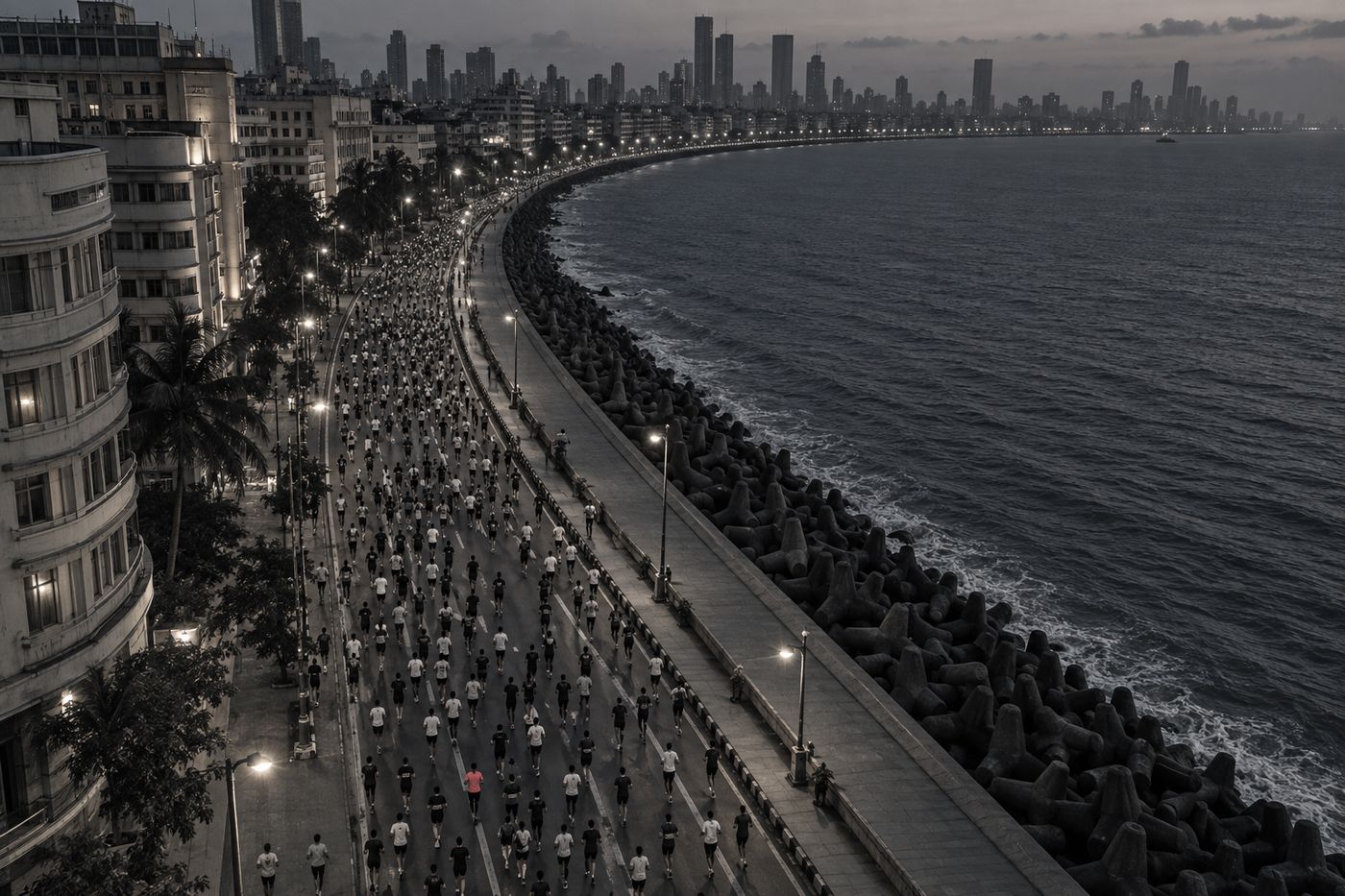
Most first-time racers are best served by a short, flat road race in their own city, held in the cool months between roughly October and February, and entered alongside people they already run with. Choose one you can train for comfortably, not the one that sounds best. The half and the full marathon will still be there next season.
5K or 10K for your first race
A 5K is about three kilometres of effort and two of nerves. If you can already run for twenty or thirty minutes without stopping, you can probably finish one with a few weeks of regular running behind you. People who are starting from nothing tend to allow somewhere around two months. The NHS’s free Couch to 5K plan, for example, is built around nine weeks.
A 10K asks for more, but not twice as much. Many beginners give it a couple of months or more of regular running. It is long enough to feel like a proper race, and short enough that one bad morning in training does not undo everything.
If you are choosing between the two, a simple test works. If the thought of a 10K makes you want to start running this week, pick the 10K. If it makes you want to put the whole thing off, pick the 5K.
| Distance | Typical lead-in | Suits |
|---|---|---|
| 5K | A few weeks to a couple of months | Complete beginners, or anyone returning to running |
| 10K | A couple of months or more | People who already run regularly |
| Half marathon | A few months | Runners comfortable at 10K |
| Full marathon | Several months, after a year or so of running | Runners with a half marathon behind them |
When you are ready for a half or full marathon
A half marathon is 21.1 kilometres, and it changes the job. You are no longer just running; you are running for two hours or more, which means thinking about water, food and what your feet do after the first hour. Most people who come to it from a comfortable 10K allow a few months, and most do not come to it as a first race.
A full marathon is 42.2 kilometres, and training for one takes over a few months of your life, including long runs on weekend mornings that eat the whole morning. Common advice is to have a year or so of steady running and at least one half marathon behind you first. That is not only caution. Some of the big city marathons will not accept you for the full distance without a previous finish, which is covered below.
If you are new to exercise, or have not done much of it in a while, see a doctor before you commit to any of these. A check-up is cheaper than an injury.
India’s running season
Most of the country races in the cooler months, roughly from October or November to February or March. The reason is simple. April to June is too hot for most people to run far safely, and the monsoon months bring waterlogged roads and humidity that makes every kilometre feel like two.
So the season has a shape. Training for the winter races happens through the monsoon, which is its own discipline. The biggest events cluster from November to February, and a few cities with milder weather hold races outside that window. Bengaluru is the usual example. For how this plays out in one city, see running in Mumbai.
In practice this means you pick a race first and count backwards. If the race you want is in January and you need three months, your training starts in October, and your registration probably needs to happen before that.
How race entries work in India
You enter on the organiser’s own website, or on the registration platform they use. There is no central booking. A few things catch first-timers out:
- Big city races fill up. Well-known events such as the Tata Mumbai Marathon, the Delhi Half Marathon and the World 10K Bengaluru open registration months ahead, and popular categories can close early. Smaller local races are usually easier to get into.
- Some categories need proof. The full marathon at the Tata Mumbai Marathon, for example, has asked for a timing certificate from an earlier race; check the current rules on the official site before you plan a season around it.
- There is a cut-off time. Most races close the course after a set time, and runners still out there may not get an official finish or a timing certificate. Check it against how fast you actually run, not how fast you hope to.
- You collect your bib before race day. Larger races hand out bibs and timing chips at an expo in the day or days before, sometimes in booked time slots. Most races will not hand bibs out on race morning, so plan travel around collection.
- The start is early. Races often start at 5 or 6 am, to beat the heat and the traffic. That means an early night, a very early alarm, and knowing how you will get to the start before the roads close.
Entry fees vary a great deal by race and distance. Look at the organiser’s page for the current figure, and at their refund and transfer rules while you are there.
A flat city course or a trail race
A flat road race in a city is the easiest first race to prepare for. The surface is predictable, there are water stations at set distances, the route is marked, and there is usually a crowd. If something goes wrong, help is close.
Trail races are a different sport that happens to also involve running. Hills, loose ground and fewer aid stations mean a trail 10K can take far longer than a road 10K, and the pace you train at on the road does not carry over neatly. They are a good second or third race, especially if you already run on hills. As a first, pick one only if the trail is where you train.
Whichever you choose, look at the course map and the elevation before you enter. “Scenic” on a race page often means “uphill”.
Travel races for beginners
Travelling to a race in another city is appealing, and it is also where most of the avoidable problems live. You are sleeping somewhere unfamiliar, eating food you did not choose, collecting a bib in a city you do not know, and getting to a start line at dawn.
For a first race, a local one is usually the better choice. You sleep in your own bed, you can run the course beforehand, and the only travel is the ride to the start. If you do travel, arrive at least a day early, book somewhere close to the start, and check the bib collection times before you book tickets.
Run your first race with people you know
Going with other people helps a first race more than most kit does. Training alongside someone who has entered the same race makes the dull weekday runs happen. On the morning itself, having somebody to meet at 4.30 am, and somebody waiting at the finish, turns a nervous solo errand into a day out.
If you do not yet run with anyone, that is the first thing to fix, and it is easier than it sounds. Most cities have running clubs that meet on weekend mornings and welcome slow beginners. There is more on that in how to find running partners and in what to expect at your first group run.
Finding running events in your city
This is the part Runstra does. The Events tab lists races worth training for in your city. When you find one, say you are going and pick your distance. Your clubs can see it, so the people you already run with know who else has entered, and you can find each other on the start line instead of in a crowd of thousands.
Entering still happens on the organiser’s own site. Runstra does not sell race entries, and it does not track your running or write you a training plan. It just makes sure you are not the only person you know in the start pen.
Runstra is free; here is how to get it.